



Have you ever heard of a martingale collar and wondered what it's all about? We'll tell you!
A martingale collar is a special type of dog collar that aims for gentle control and security without choking the dog. The secret to this type of dog collar lies in its design:
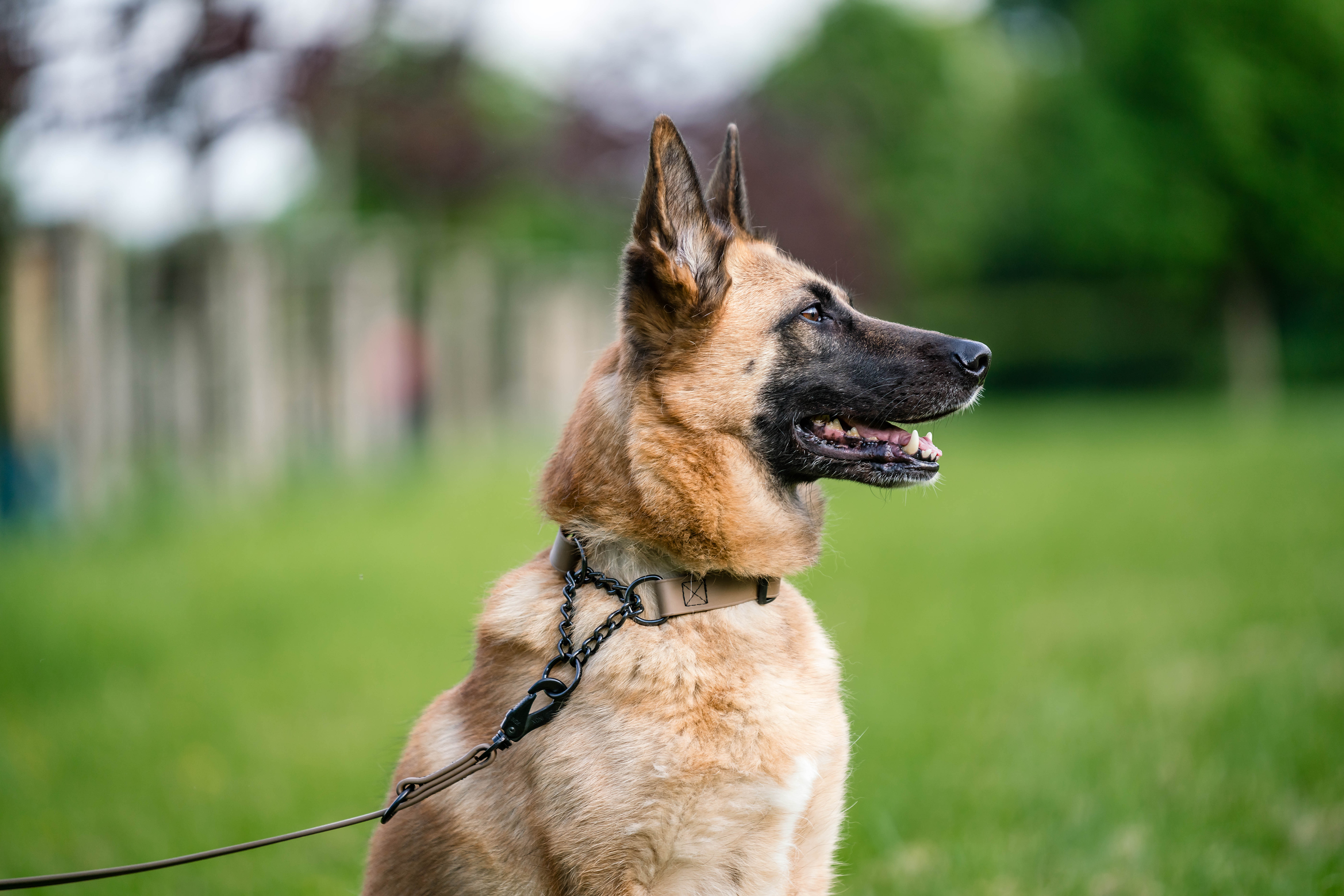
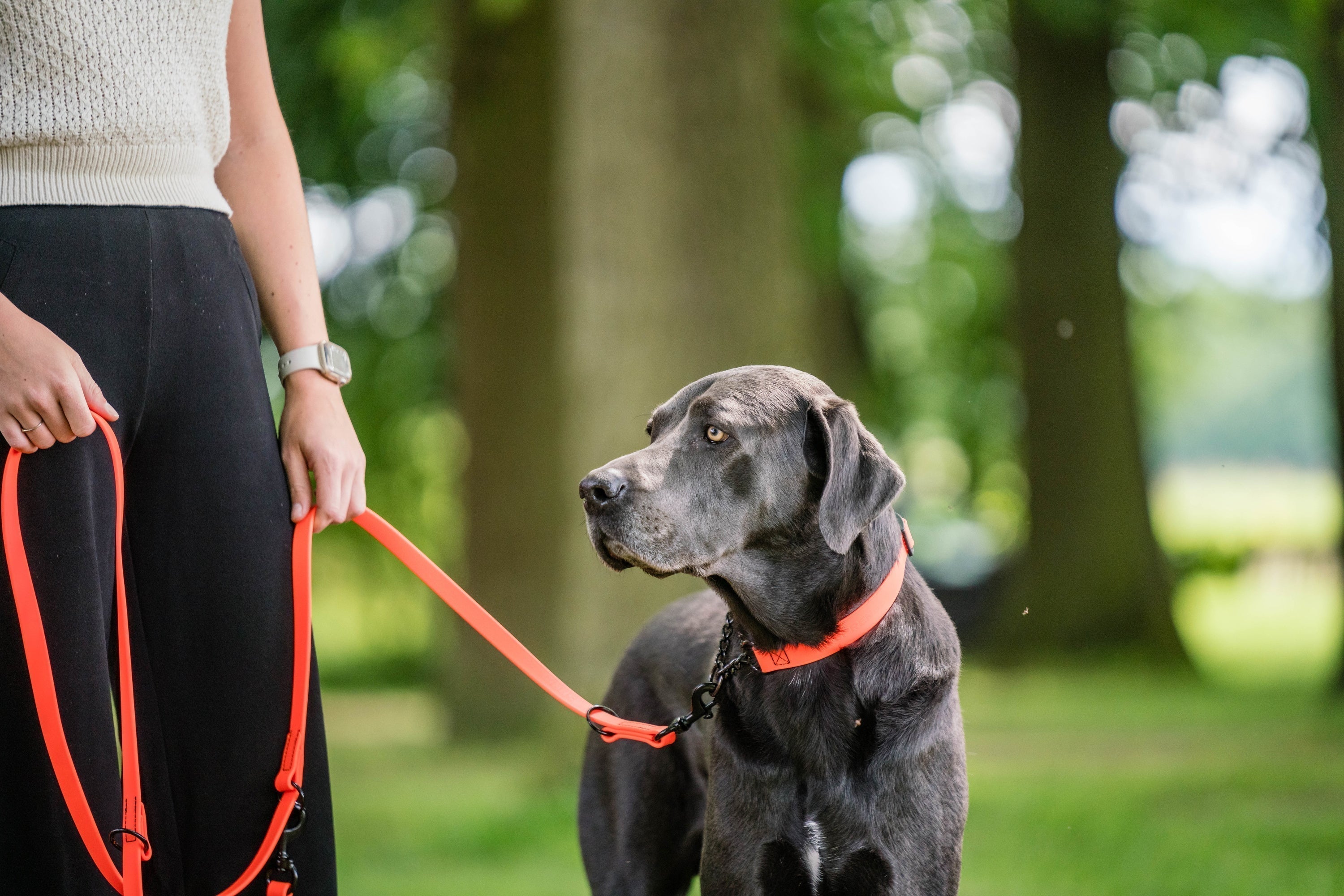
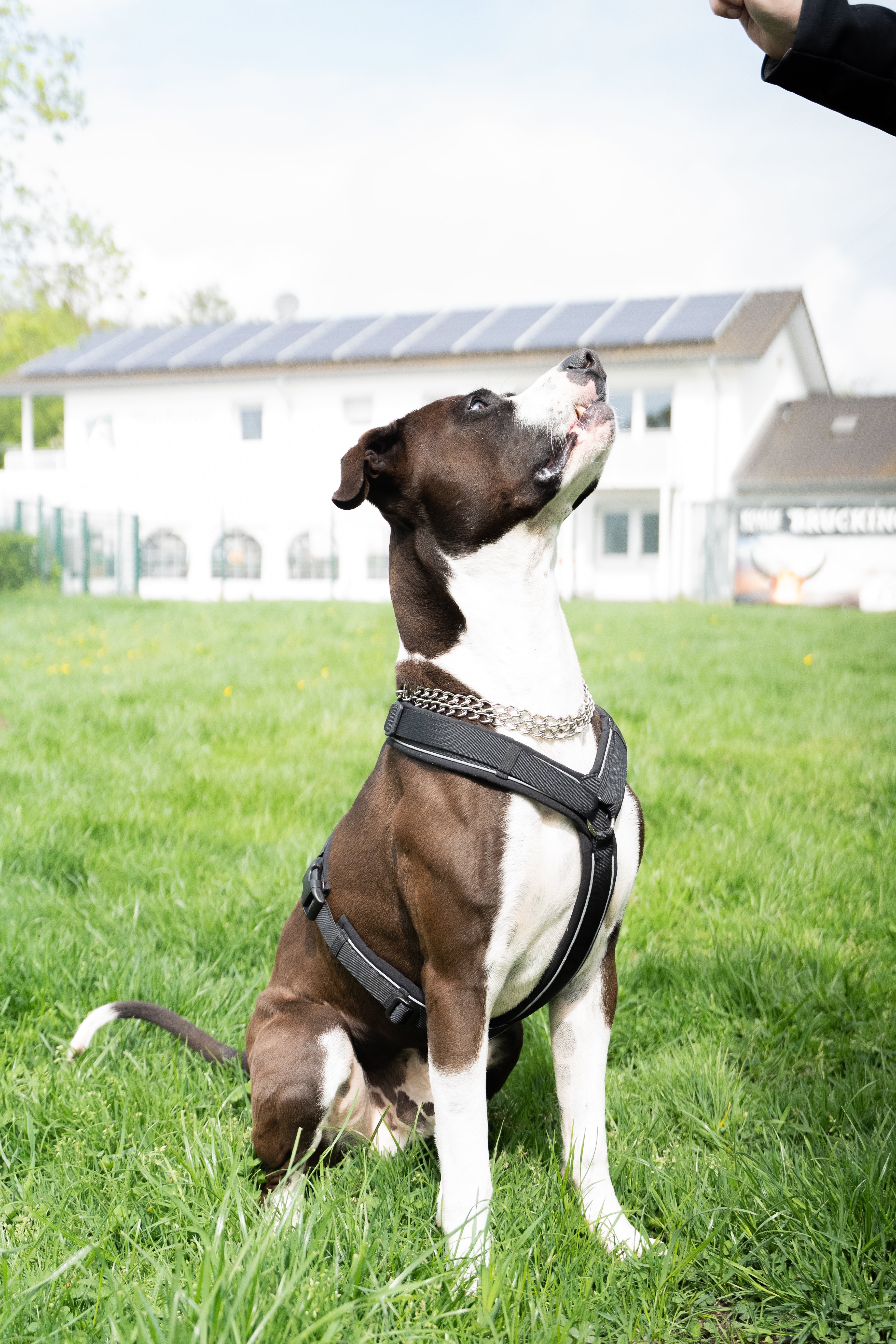
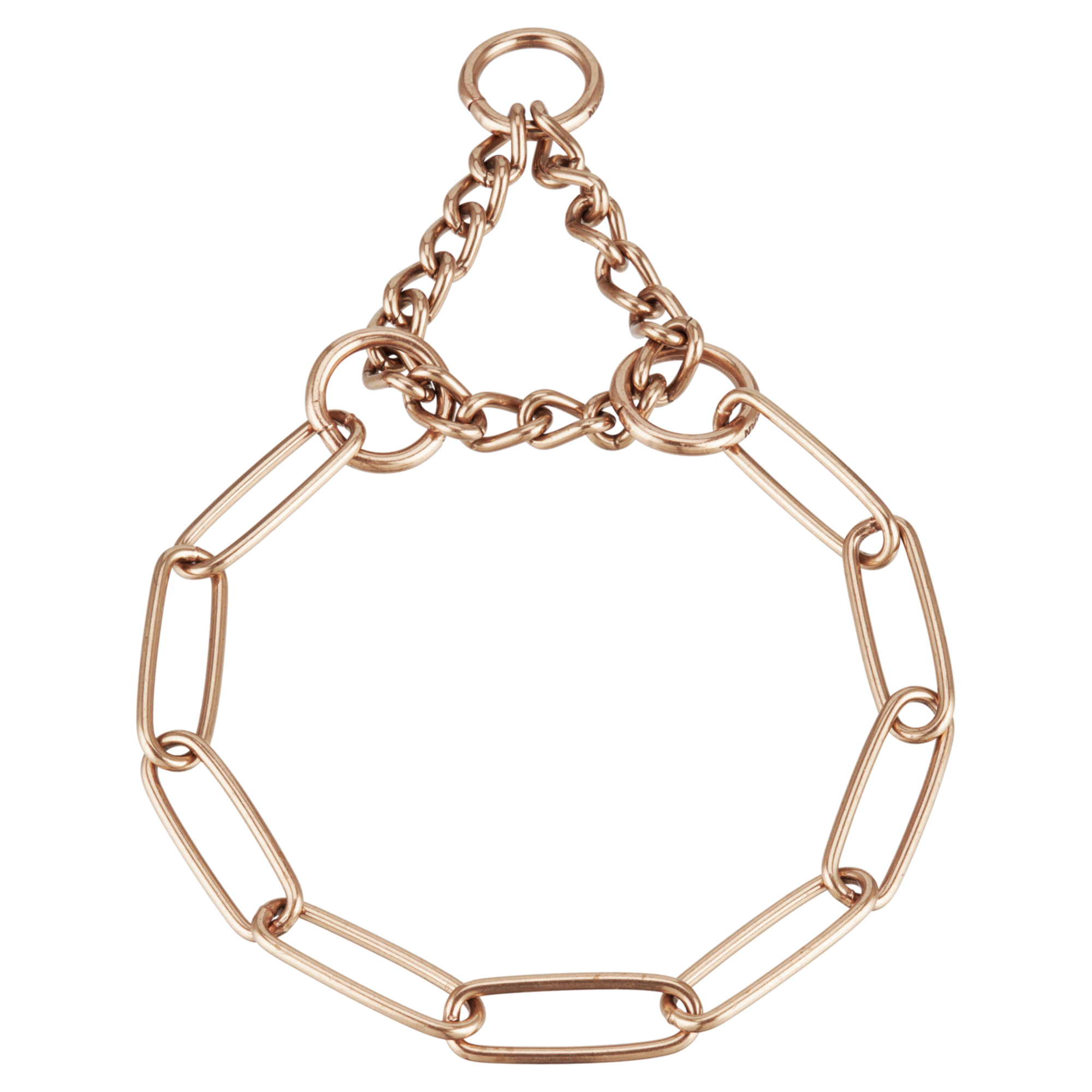
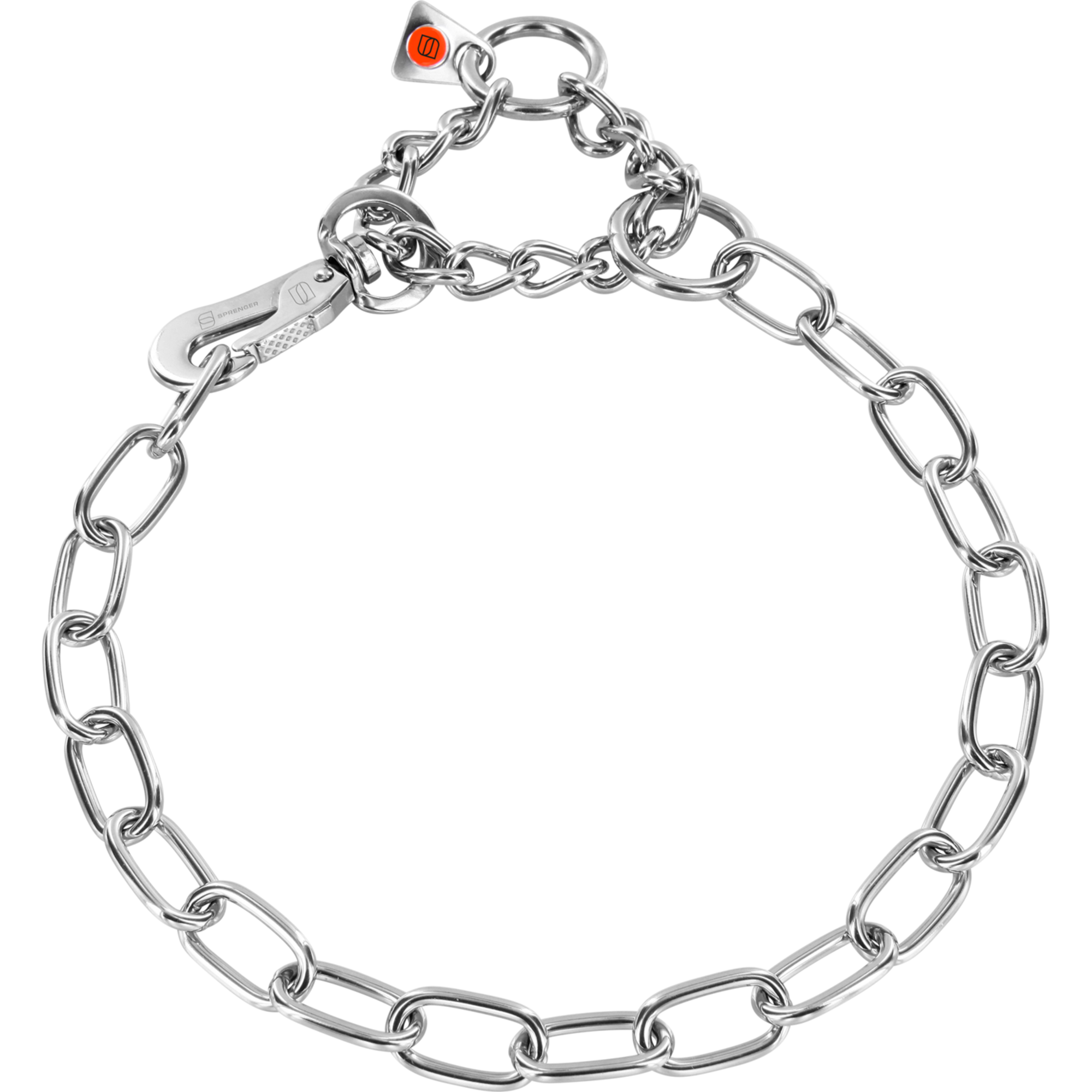
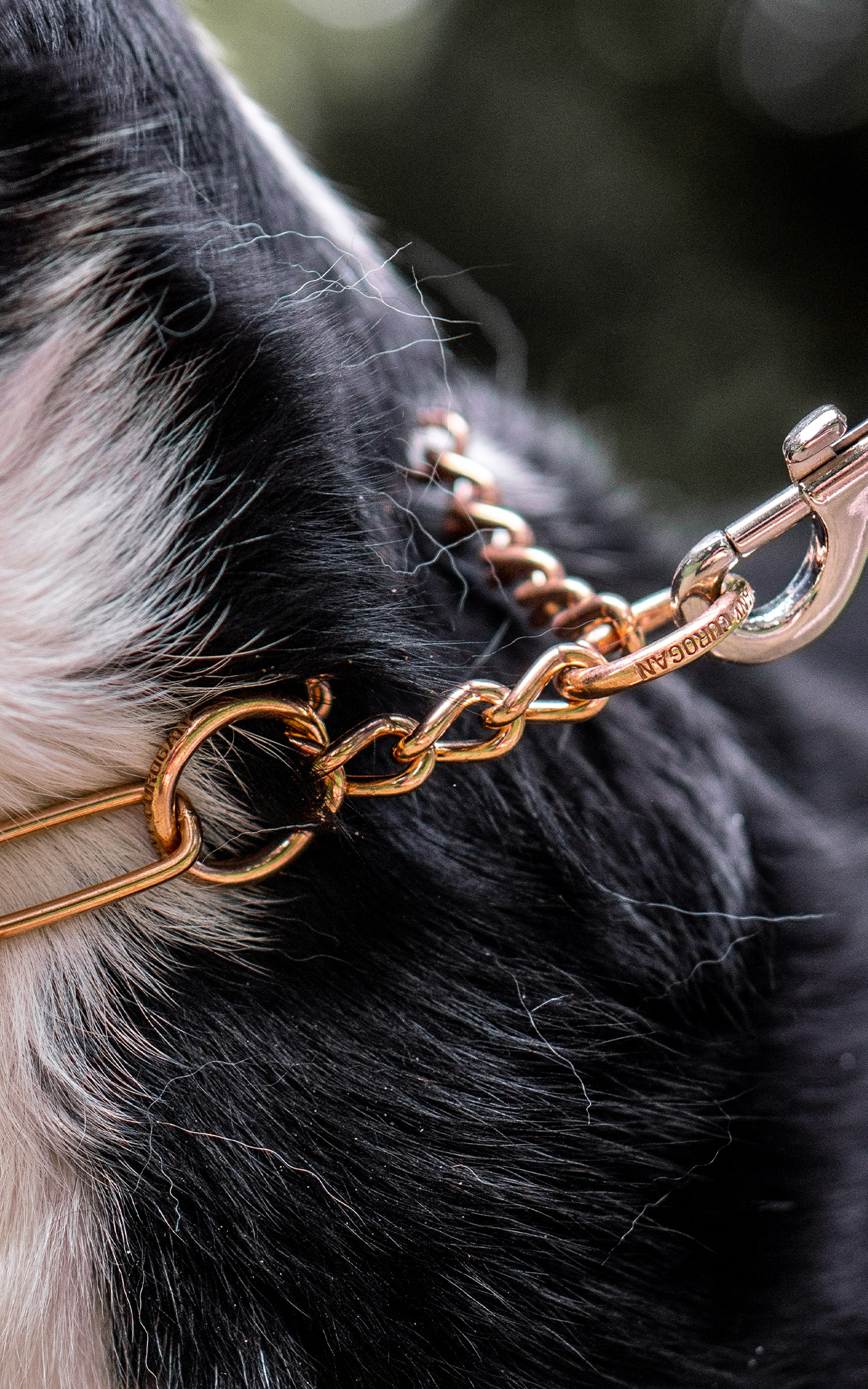
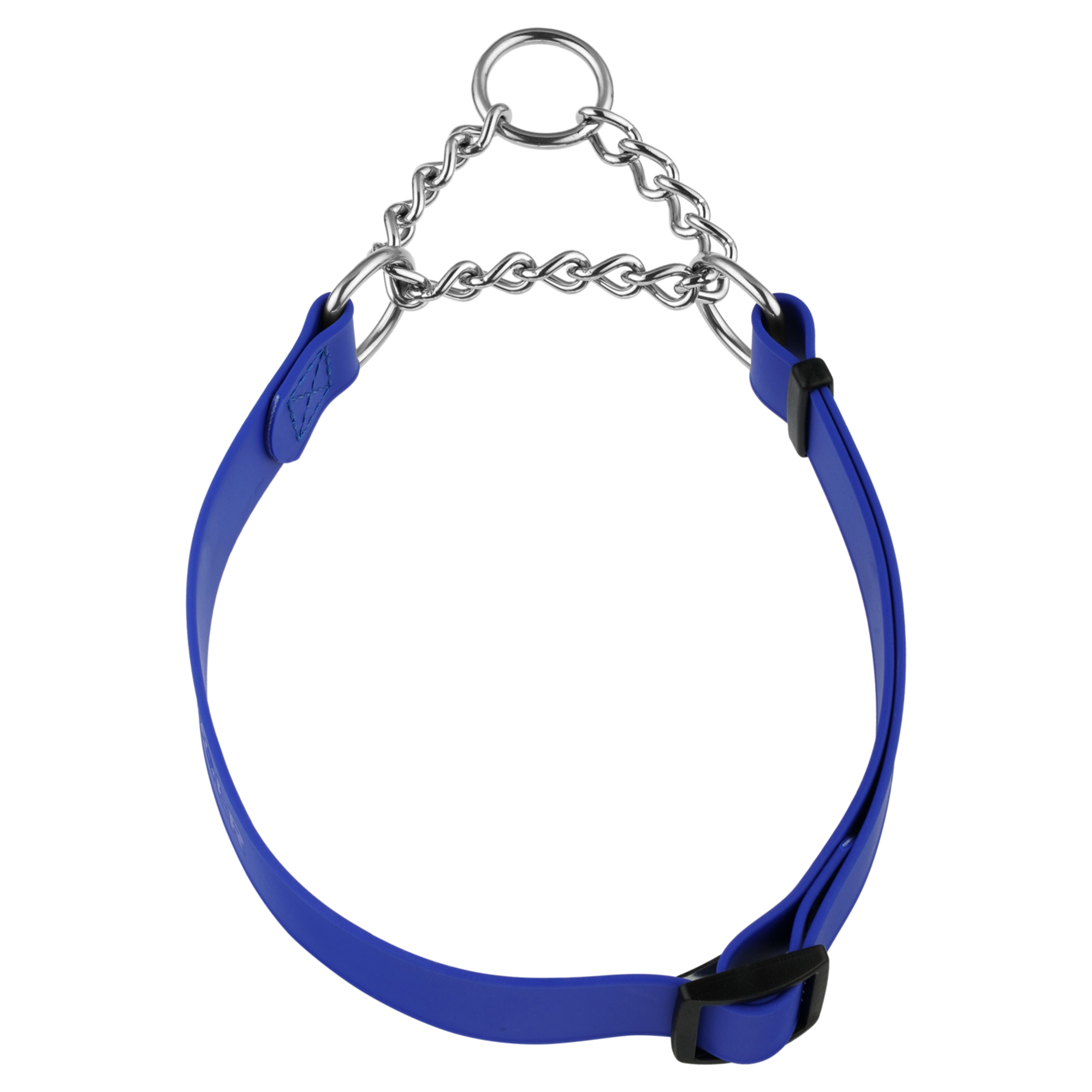
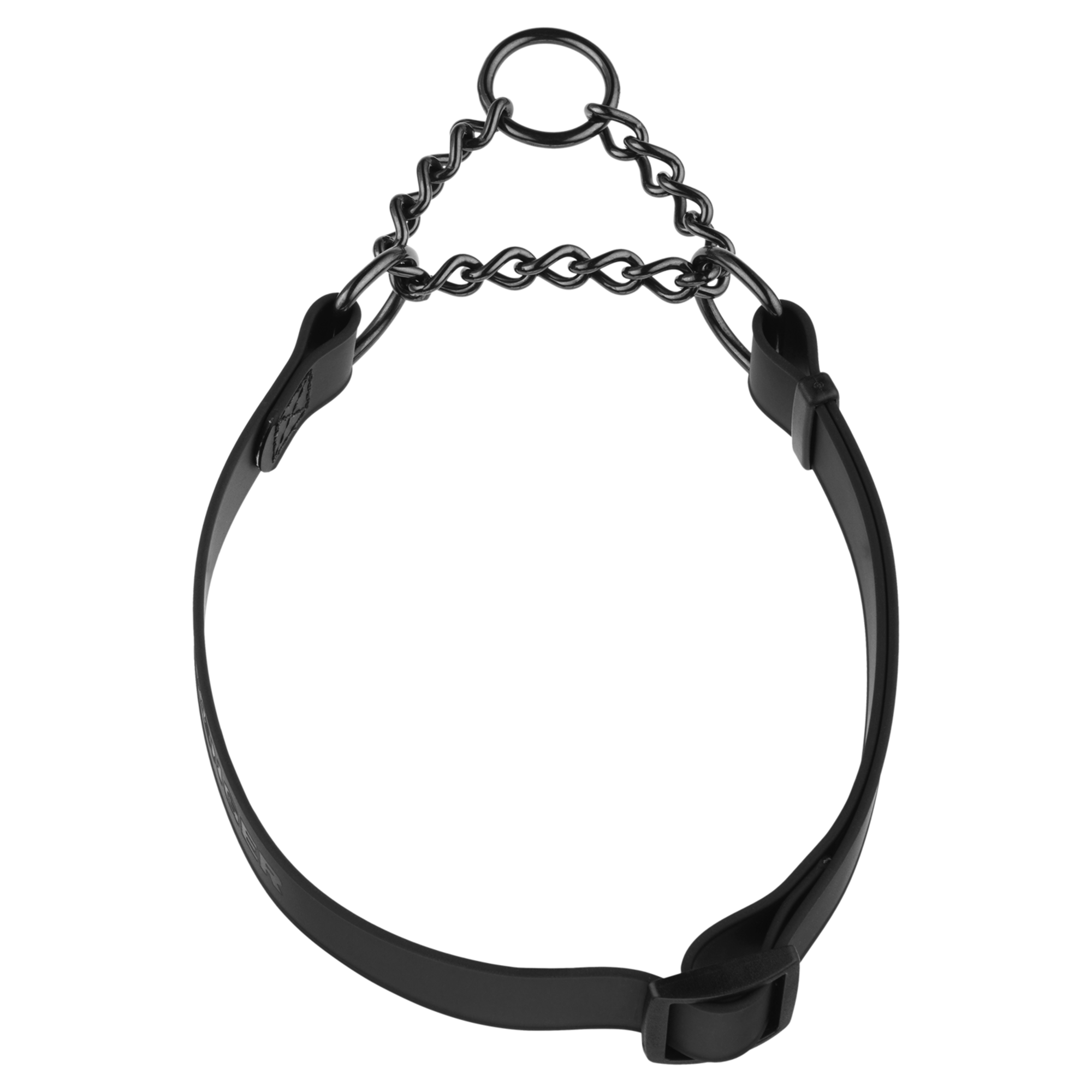
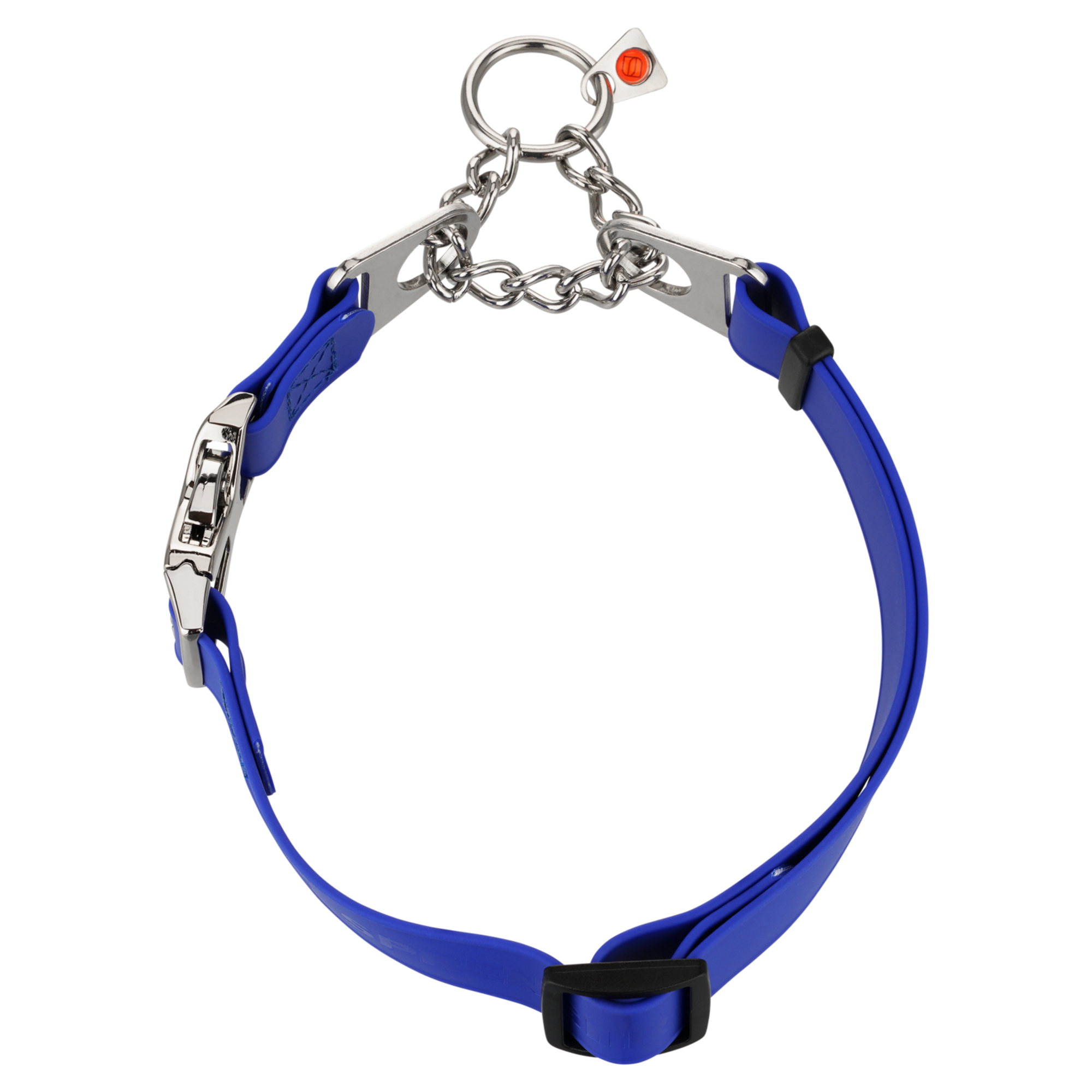
A martingale collar consists of two loops – one larger and one smaller. The larger loop forms the actual collar for your dog, while you attach the leash to the smaller loop. If your dog pulls, for example, in an attempt to slip out of the collar due to fear, the small loop tightens, narrowing the collar's opening to prevent it from slipping over the head.
It is important that a martingale collar can never fully close – it has a fixed stop – and should not choke the dog even in its tightest setting.
What does a martingale collar do?
The primary benefit of a martingale collar is to secure the dog from escaping the collar.
Sometimes you also see dog owners who use a martingale collar to reduce pulling on the leash. For dogs where pulling on the leash is rare and slight, a martingale collar can help by giving the dog gentle feedback when pulling. However, the martingale collar is not specifically designed for this, and for issues with leash manners, one should work with an experienced trainer.
Which dogs is a martingale collar suitable for?
Martingale collars are particularly recommended for the following dogs:
- Anxious dogs
- Rescue dogs
- Dogs that tend to slip out of other collars and harnesses
- Dogs with narrow heads, such as Greyhounds or Whippets
- Dogs with a wide neck in relation to their head

What types of martingale collars are there?
The most well-known type of martingale collar is the two-loop version. However, you may also find collars that don't immediately appear to have this design. Instead, the smaller loop may look straighter, and at first glance, the collar might resemble a classic choke collar. Therefore, make sure you familiarize yourself with the construction and correct use of the collar you choose beforehand.
Martingale collars come in a wide variety of materials. Among the most popular are nylon, fabric, Biothane, leather, and metal (chains) – combinations of different materials are also frequently found! The material used is not just a matter of aesthetic taste; it also influences the properties of the collar, for example, in terms of durability or care. Ultimately, you should choose a material that suits your application and requirements.
Additionally, there are Martingale collars with or without a buckle. Models with a buckle make putting on/taking off the collar easier, as they don't have to be pulled over the head. If it's a collar with a plastic buckle, this can however be more prone to failure or damage, thus compromising safety – especially for fearful dogs or rescue dogs.
Models without a buckle must be pulled over the head, which must be taken into account when choosing the size of the dog collar.

SPRENGER martingale collars
We also offer a wide selection of martingale collars. With our collars, we refer to the smaller loop of the Martingale collar as the so-called assembly chain – it gets its name precisely from its construction:
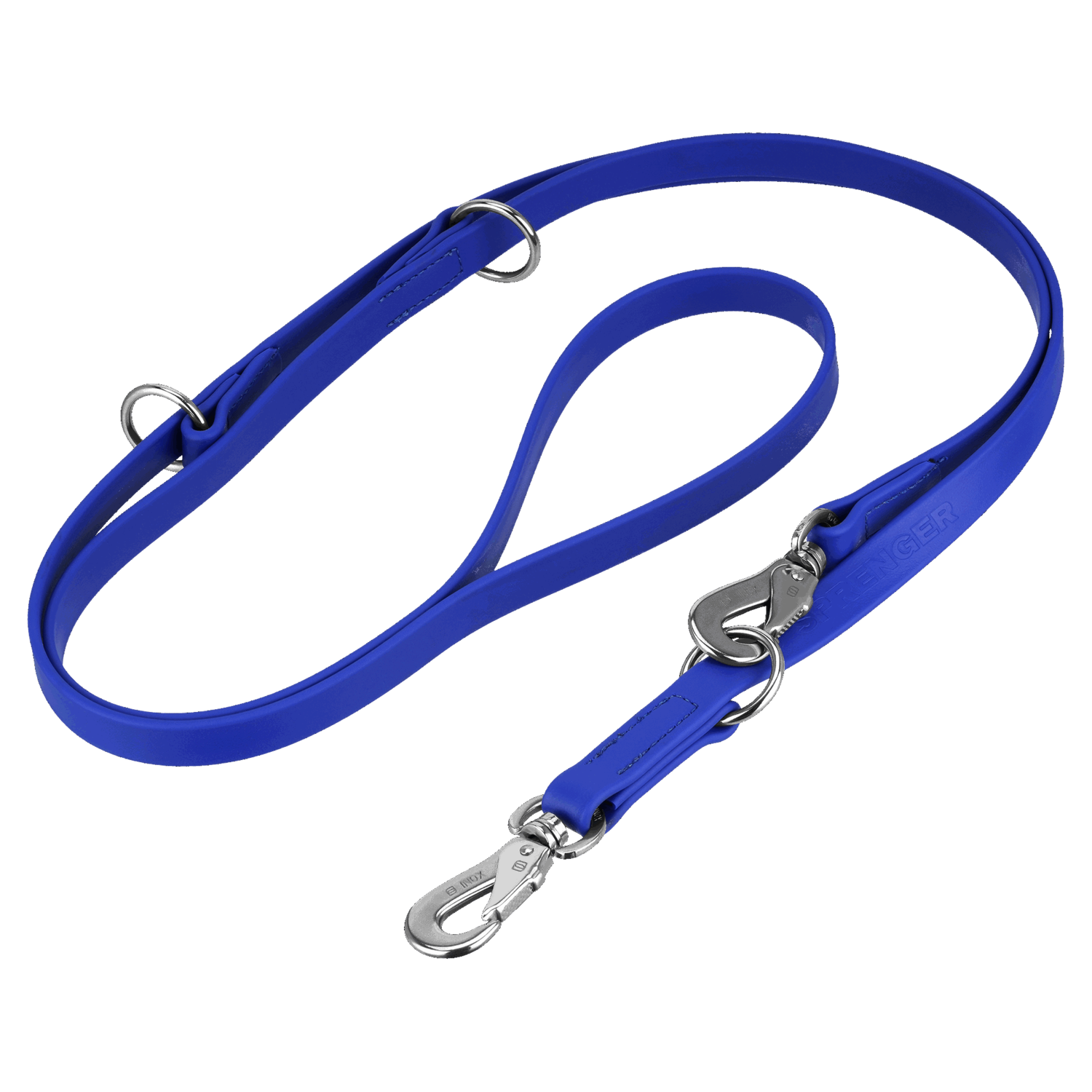
The leash, connected to a ring, pulls the choke chain through the rings of the actual collar, thereby tightening it to a fixed point.
Currently, you can find martingale collars from us in two different material types:
- BioThane® with an assembly chain made of stainless steel
- Metal chain collars with an assembly chain
We differentiate between fixed martingale collars, where the collar cannot be adjusted, and adjustable martingale collars, where the length of the collar can be adjusted. The assembly chains themselves are not adjustable.

BioThane® Martingale Collars
Our BioThane® collars use original BioThane® Made in USA and combine it with our stainless steel assembly chains Made in Germany, to create secure martingale collars that come in great colors!
Thanks to the sewn connections, the collars are particularly durable with high breaking strength and the material combination is easy to care for, in any weather.
The BioThane® collar is infinitely adjustable and can therefore be adjusted precisely to prevent the dog from slipping out of the collar without choking them!


Chain collars with a assembly chain
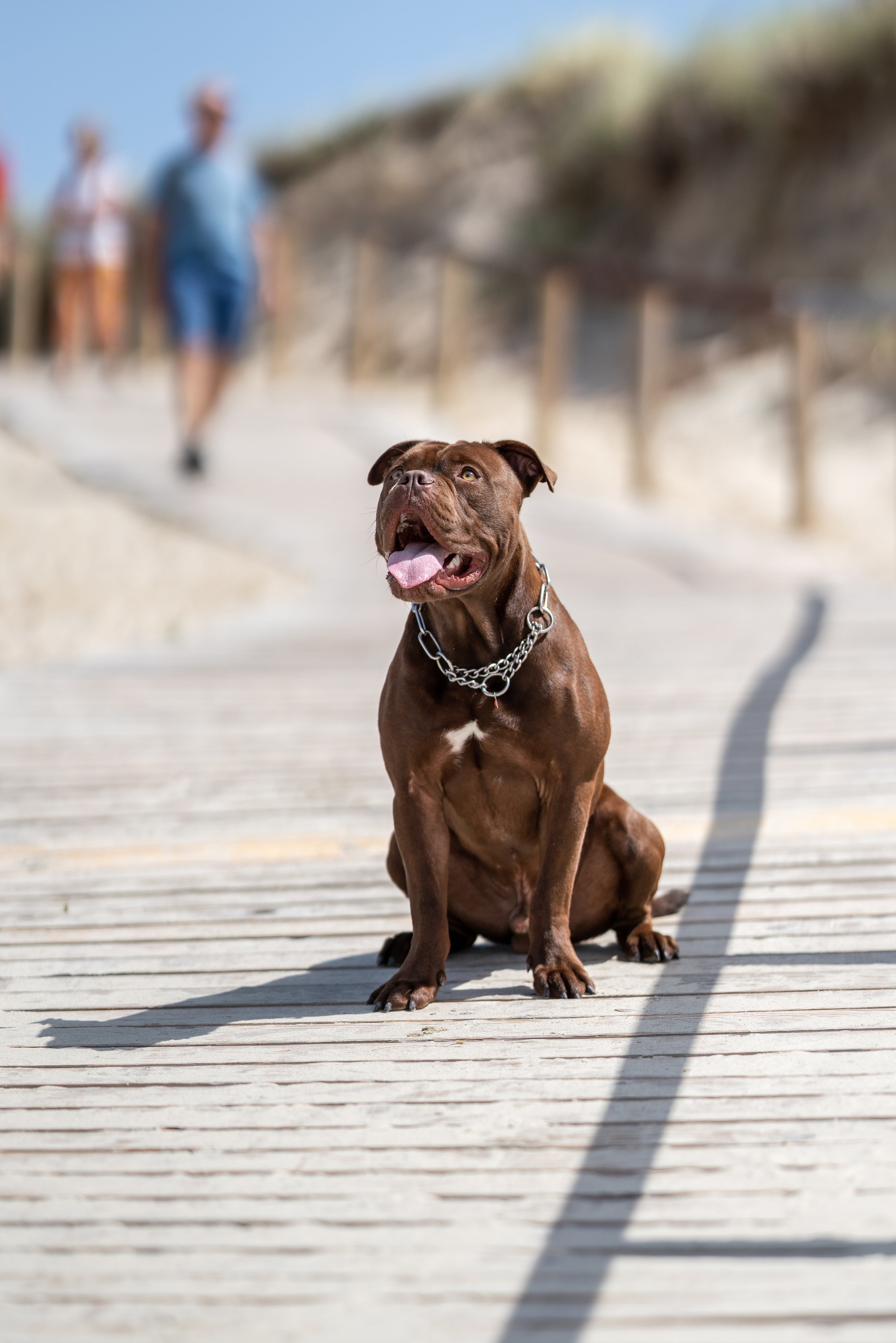
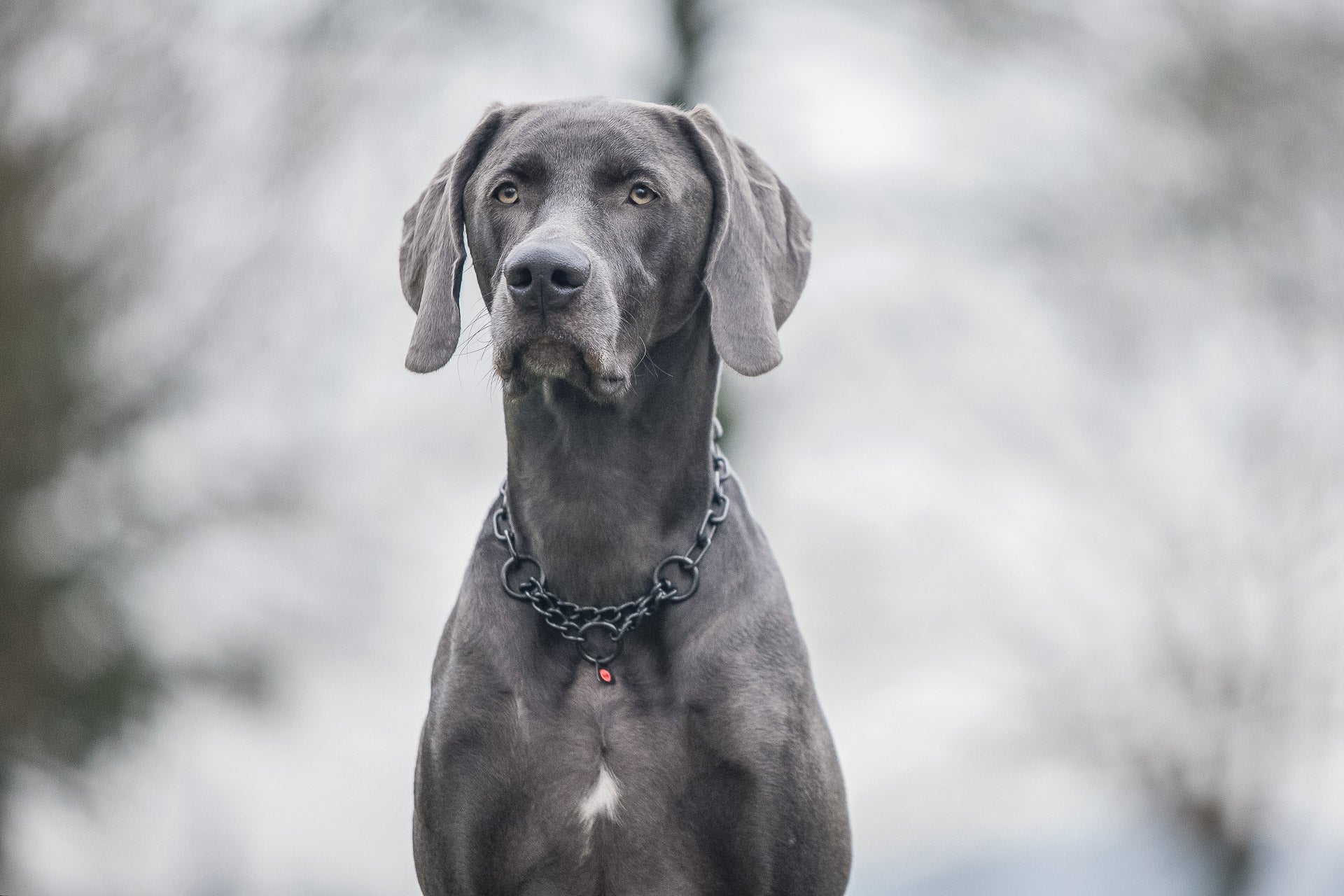
All of our chain collars with an assembly chain are martingale collars. We offer a wide range of wire gauges, materials, and link types. But what do they all have in common?
Chain collars are extremely safe, durable, and easy to maintain. They are exceptionally well-suited as a backup to another collar or harness for anxious dogs, or as a particularly airy and loose-fitting collar for dogs that rarely need guidance and security on a leash via the collar.
Important: While our chain models with a sliding chain and hook are adjustable and can be precisely tailored to the dog, and our NeckTech Fun chains with an assembly chain can be adjusted in length by adding or removing links, choosing the correct size is crucial for our non-adjustable chain collars with an assembly chain!
Only a martingale collar that is the correct size can achieve the intended effect - that is, tightening without choking!
How to use a martingale collar correctly?
Using a martingale collar is actually quite simple; you basically just need to keep three things in mind:
- Ensure the collar is the correct size
- Ensure the collar is put on correctly
- Use it in a controlled manner and in combination with a leash – when off-leash or playing, the assembly chain/smaller loop poses an increased risk of getting snagged for your dog or other dogs.
Correct martingale collar size
For safe and correct use of a martingale collar, the correct size selection or size adjustment is crucial.
The rule here is: neck circumference + length of the small loop or assembly chain = collar length.
The goal is that when pulled tight, only the neck circumference remains. If the collar is used on a dog that is particularly prone to wriggling out or has a particularly narrow head, the neck circumference should be measured directly behind the ears, instead of lower on the neck where the collar usually sits – only then can it be guaranteed that wriggling out will be prevented. Adjustable models offer more room for error and are also perfect for dogs that are not yet fully grown.
If you choose a martingale collar without a clasp, it must be pulled over the head. In this case, ensure that the chain length is greater than your dog's head circumference at the widest point. This is not necessary for models with a clasp.
For our collars with an assembly chain, we recommend adding 5cm to 8cm to the neck circumference, depending on the model, and the length of the assembly chain – you can find the exact recommendation on the product page for each collar!
You can find more information on choosing the right dog collar size for different collar types in our blog post on the topic!

How to properly put on a martingale collar
Problems with properly putting on a martingale collar primarily occur with small dogs or dogs with small neck circumferences. The reason: The two loops can appear almost the same size at first glance or when in a hurry. If you then accidentally pull the small loop over your dog's head and they later pull on the leash, your dog could be choked!
So remember: The large loop goes on the dog, the small loop goes on the leash!

Is a martingale collar a choke collar?
No, martingale collars are not choke collars. They are designed to prevent the dog from slipping out by tightening, but not to choke the dog.
However, this requires correct use and the right size or adjustment for adjustable models.